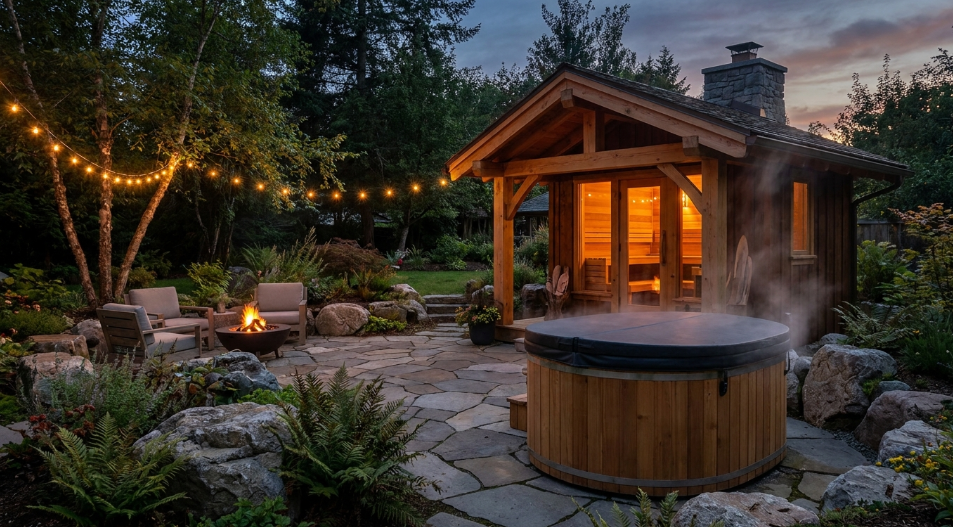
The setup that holds up best for two people using a barrel sauna daily is a 6 to 7-foot diameter model with a heater sized for quick daily warm-up, a two-tier curved bench, and a gravel or paver base that won’t need redoing. Total first-year cost for that setup, unit through accessories, typically runs $4,500 to $8,000, with the ongoing yearly cost after that dropping mostly to electricity and small upkeep items. Here is where the money actually goes, line by line.
The Barrel Itself: $3,000 to $5,500
A 6 to 7-foot diameter barrel kit with a two-tier bench, built for two to three people, is the right size for daily use by a couple: large enough that you’re not shoulder to shoulder, small enough to heat efficiently every single day. Traditional electric or wood-fired kits generally run $3,500 to $5,500 depending on cedar grade and heater size, while infrared barrel kits often come in a bit lower, $3,000 to $4,500, since they skip the stove, rock bed, and any chimney hardware.
Ground Prep and Cradle Base: $200 to $1,500
A barrel sits on a steel cradle stand rather than a flat sill, and that stand needs a level, well-drained surface underneath it. A DIY gravel pad, excavated a few inches and topped with compacted gravel, costs a couple hundred dollars in materials for a weekend project. A contractor-poured concrete pad or paver base for the same footprint runs closer to $1,000 to $1,500. For daily use specifically, spend the money to get this right the first time, since a base that shifts or drains poorly becomes an annoyance you deal with every single day rather than an occasional one.
Electrical or Chimney Work: $300 to $1,500
An electric heater over roughly 6 kW typically needs a dedicated 240-volt circuit, running $500 to $1,500 depending on distance from your panel, while infrared panels often plug into a standard outlet and add little to nothing here. A wood-fired stove skips electrical work but needs a roof-penetrating chimney kit sealed against the curved roof, commonly $300 to $800 in materials and labor. Get a firm quote before ordering the barrel itself, since this line item can rival the cost of the unit on a site that’s far from existing power.
Accessories: $100 to $350
Daily users get more out of a few basics than out of upgrades: a wood bucket and ladle, a wall thermometer and hygrometer, and a simple auto-shutoff timer if the heater doesn’t already include one, together running $100 to $250. A towel hook, a small bench cushion, or an outdoor mat by the door adds another $50 to $100 and does more for whether the routine actually sticks than most people expect.
Running Cost: $15 to $50 a Month
Daily use, seven sessions a week, is where heater choice matters most to the ongoing bill. An infrared panel setup typically costs 15 to 30 cents in electricity per session, landing around $10 to $20 a month for daily use. A traditional electric stove costs more per sit, often 50 cents to a dollar, pushing monthly cost closer to $20 to $30 for the same frequency. Wood-fired sidesteps the electric bill almost entirely, with cost depending on your access to firewood instead. Buyers weighing all three heat types against a specific daily budget can compare current models in the SweatDecks saunas collection to see listed running-cost estimates side by side before choosing a heater.
Ongoing Maintenance: $50 to $150 a Year
Daily cycling puts more hours on the heater and more stress on the hoops than occasional weekend use, so expect these tasks on the shorter end of their typical interval. Rock replacement, if you’re running traditional heat, generally falls every one to two years and costs $30 to $80. Hoop tightening is a five-minute check a couple of times a year, free beyond your time, but worth doing more often than you would on a barrel used only on weekends. Budget $50 to $150 a year total once the setup is past its first season.
How This Setup Compares to an Occasional-Use Barrel
An occasional-use household, saunaing once or twice a week instead of daily, doesn’t spend differently on the barrel or ground prep, since those costs are fixed regardless of how often the unit gets used. What actually changes is the running cost and the maintenance interval. A twice-weekly household typically sees monthly running cost drop to $8 to $15 instead of the $15 to $50 range a daily user pays, and rock replacement or hoop tightening can stretch toward the longer end of the usual one-to-two-year window rather than the shorter end. The daily setup described above is deliberately sized and heated for frequent cycling rather than for entertaining occasional guests, and that distinction matters more than people expect: a heater built for frequent use handles occasional sessions just fine, while a heater sized for occasional use and then pressed into daily service tends to wear out sooner than its rated lifespan suggests.
Anyone unsure how often the household will actually use a new barrel is generally better off budgeting for the daily-use setup from the start. Downsizing later is rarely an option once a barrel is installed and plumbed for power, while a slightly more capable heater sitting underused for a year costs little beyond the modest difference in upfront price.
Total First-Year Cost
Add it up: a $3,500 traditional electric barrel, $600 in ground prep, $900 in electrical work, $200 in accessories, and $250 in running cost across the first year lands close to $5,450. A leaner infrared setup on an existing outlet with a simple gravel pad can come in closer to $3,600 total. Either way, budgeting the full picture rather than just the unit price avoids the surprise that catches a lot of first-time buyers off guard once delivery, wiring, and ground prep are all tallied up.
Frequently Asked Questions
What size barrel sauna is best for two people using it every day?
A 6 to 7-foot diameter barrel, large enough for a two-tier bench without being oversized for quick daily warm-up.
What is the total first-year cost of a two-person daily barrel sauna?
Including unit, ground prep, electrical work, and accessories, most setups land between $4,500 and $8,000 in year one.
Does daily use raise a barrel sauna’s maintenance cost noticeably?
Somewhat. Rock replacement and hoop tightening tend to happen on the shorter end of the typical one-to-two-year interval.
Is infrared or a traditional stove cheaper for daily two-person use?
Infrared is cheaper per session, often 15 to 30 cents versus 50 cents to a dollar for electric traditional.
References
- Cardiovascular and Other Health Benefits of Sauna Bathing: A Review of the Evidence (Mayo Clinic Proceedings, 2018)
- Benefits and risks of sauna bathing (The American Journal of Medicine, 2001)
- Does the Combination of Finnish Sauna Bathing and Other Lifestyle Factors Confer Additional Health Benefits? A Review of the Evidence (Mayo Clinic Proceedings, 2023)