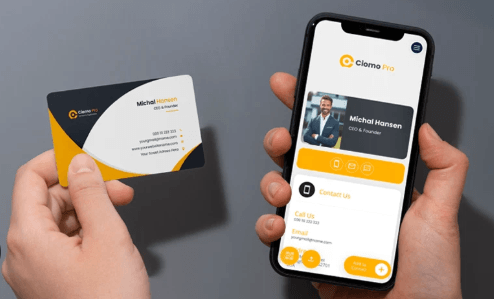
Imagine handing someone your business card — and they pull it up on their phone, tap a link, watch a short intro video, and follow you on LinkedIn, all within seconds. No paper. No printing costs. No “I think I left it on the desk somewhere.” That’s the magic of a digital business card, and more professionals are making the switch every single day.
But here’s the question that stops most people before they even start: how much is this actually going to cost me?
The honest answer? It depends. Digital business cards can cost anywhere from absolutely nothing to several hundred dollars per year — and knowing what drives that price difference is what separates a smart investment from an unnecessary expense. Let’s break it all down.
What Exactly Is a Digital Business Card?
Before we talk numbers, it helps to understand what you’re actually paying for. A digital business card is an electronic version of a traditional contact card, shared via a QR code, NFC tap, a link, or even a text message. Platforms like HiHello, Blinq, Popl, Dot, and Linq are among the most popular tools people use to create and share them. Unlike a paper card, a digital card can hold your phone number, email, website, social media profiles, a headshot, a portfolio, and even a calendar booking link — all in one shareable experience.
The Free Options: What You Actually Get
Yes, you can create a digital business card for free. Platforms like HiHello, Blinq, and Canva offer free tiers that let you build a basic card with your name, contact info, and a shareable link. These are fantastic for freelancers, students, or anyone just testing the waters.
The catch? Free plans usually come with limited customization, platform branding on your card, restricted analytics, and no NFC card integration. They work — but they may not reflect the professional polish your brand deserves. If you’re just starting out, free is a perfectly reasonable place to begin.
Paid Plans: What’s the Typical Price Range?
Most digital business card platforms offer tiered subscription plans. Here’s a general breakdown of what you can expect to pay:
Individual paid plans typically start around $3 to $10 per month, billed annually. These remove platform branding, unlock custom fonts and colors, add contact management tools, and give you access to basic analytics like how many times your card was viewed or shared.
Mid-tier plans, often aimed at small teams, range from $10 to $25 per user per month. These include team management dashboards, CRM integrations with tools like HubSpot or Salesforce, and shared branding templates.
Enterprise plans — used by large organizations and sales teams — can cost $30 or more per user per month, sometimes with custom pricing depending on team size and features.
NFC Physical Cards: A One-Time Extra Cost
Here’s where things get interesting. Many people pair their digital card with a physical NFC-enabled card — a sleek card embedded with a chip that, when tapped against a smartphone, instantly opens your digital profile. Companies like Popl, Dot, and Linq sell these cards.
NFC card prices usually fall between $15 and $50 for a single card, with premium materials like metal cards pushing past $70 to $100. This is a one-time hardware cost on top of any software subscription. It’s not mandatory, but it’s a satisfying blend of physical and digital networking.
Custom-Designed Digital Cards: Hiring a Designer
If you want something truly unique — a fully branded digital experience with custom animations, a personal domain, and pixel-perfect design — you may consider hiring a freelance designer or a web developer.
On platforms like Fiverr or Upwork, a professionally designed digital business card or personal landing page can cost anywhere from $30 to $300, depending on complexity. For a fully custom-built personal page using tools like Linktree alternatives, Carrd, or a personal website, expect to invest more time and potentially more money in hosting and domain registration, which typically runs $10 to $20 per year through providers like Namecheap or Google Domains.
Team and Business Pricing: Scaling Up
For businesses managing multiple employees, the cost model changes. Platforms like Blinq for Teams, HiHello Business, and Popl Teams charge per seat. A team of 10 people on a mid-range plan could expect to pay anywhere from $100 to $300 per month total, depending on features. The benefit here is consistent branding across all team members, centralized management, and integrated analytics that help track lead generation in real time.
See also:How Technology Is Improving Supply Chain Management
Hidden Costs to Watch Out For
It’s easy to overlook a few extra costs in the excitement of going digital. Watch out for auto-renewal fees on annual subscriptions, charges for advanced analytics or CRM integrations, costs for premium templates or custom domains, and fees for white-labeling if you want your own brand name — not the platform’s — to appear on the card. Always read the fine print before committing to a plan.
Is a Digital Business Card Worth the Cost?
When you weigh the cost of a digital card against traditional printing — which typically runs $20 to $100 per 250 cards, needs reprinting every time your details change, and contributes to paper waste — the value becomes obvious. A digital card is always up to date, impossible to lose, and makes you look forward-thinking in any networking situation.
For most professionals, a free or low-cost paid plan is more than enough. The ROI, especially for salespeople, entrepreneurs, and consultants, is undeniable.
FAQ
Can I make a digital business card for free? Yes. Platforms like HiHello, Blinq, and Canva offer free plans that let you create and share a basic digital card with no upfront cost.
What is the best digital business card platform? Popular choices include HiHello, Popl, Blinq, Linq, and Dot. The “best” depends on your needs — solo use, team features, NFC integration, or CRM connectivity.
Do I need an NFC card to use a digital business card? No. You can share your digital card via a QR code, a link, email, or text message. NFC cards are optional but add a cool physical element.
How often do I need to pay for a digital business card? Most platforms charge monthly or annually. Individual plans can be as low as $3/month. Some offer lifetime deals occasionally.
Is a digital business card better than a paper one? For most modern professionals, yes. Digital cards are always current, eco-friendly, trackable, and packed with more information than any paper card could hold.